
Last updated November 4, 2026
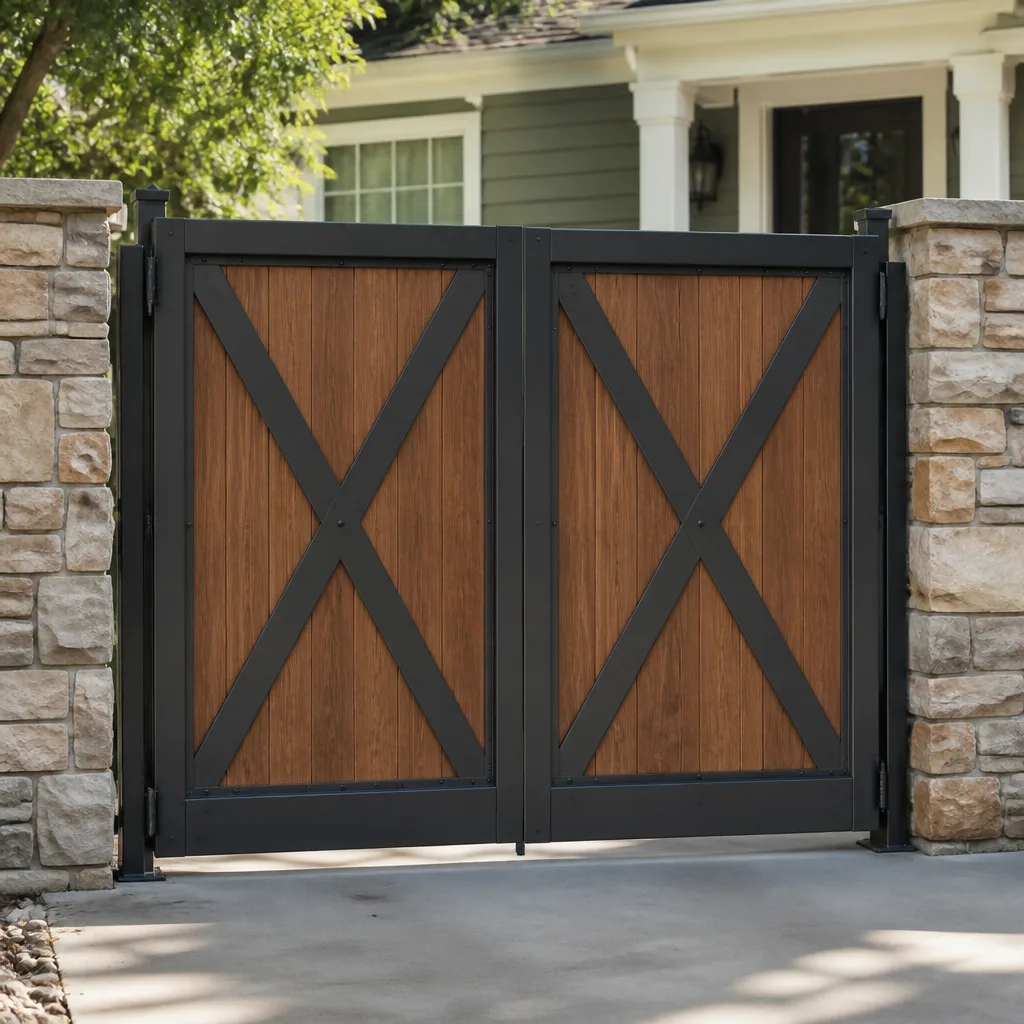 Wood & steel frame
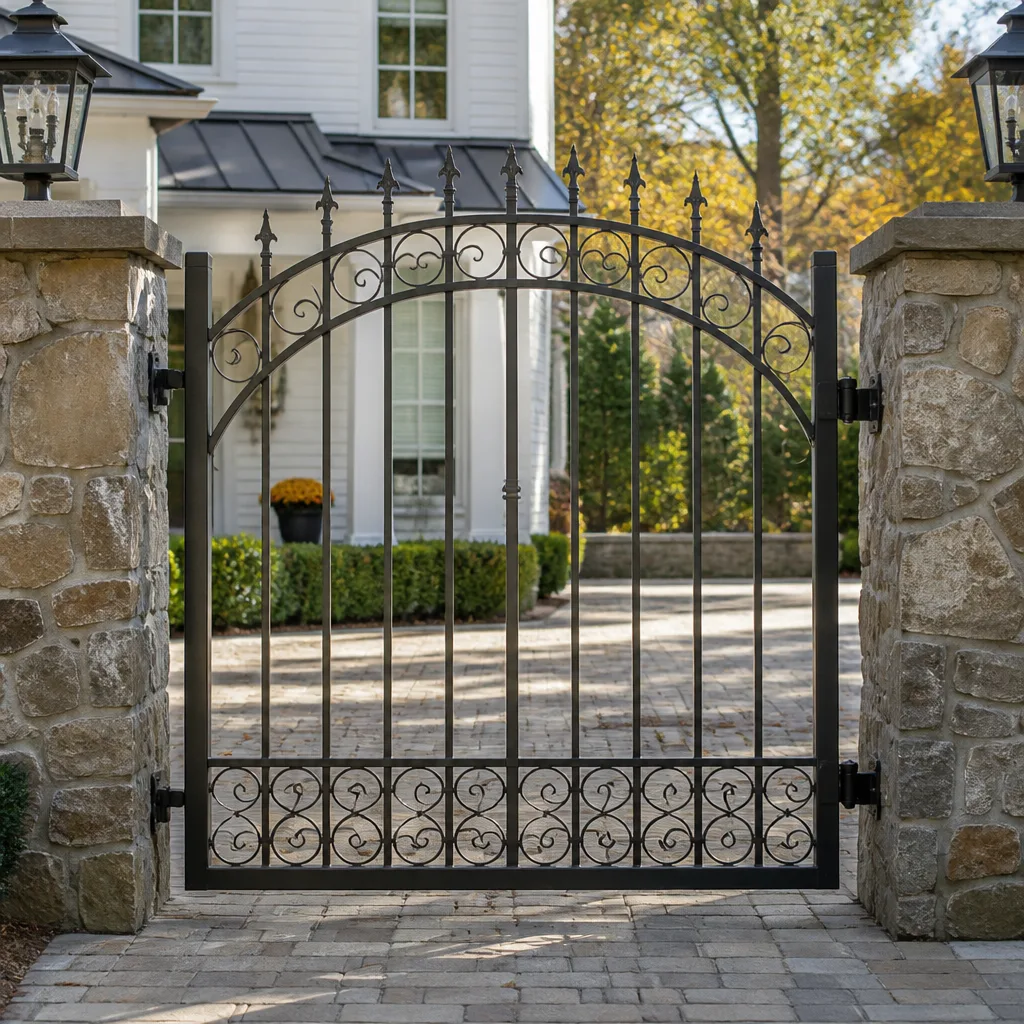 Wrought iron
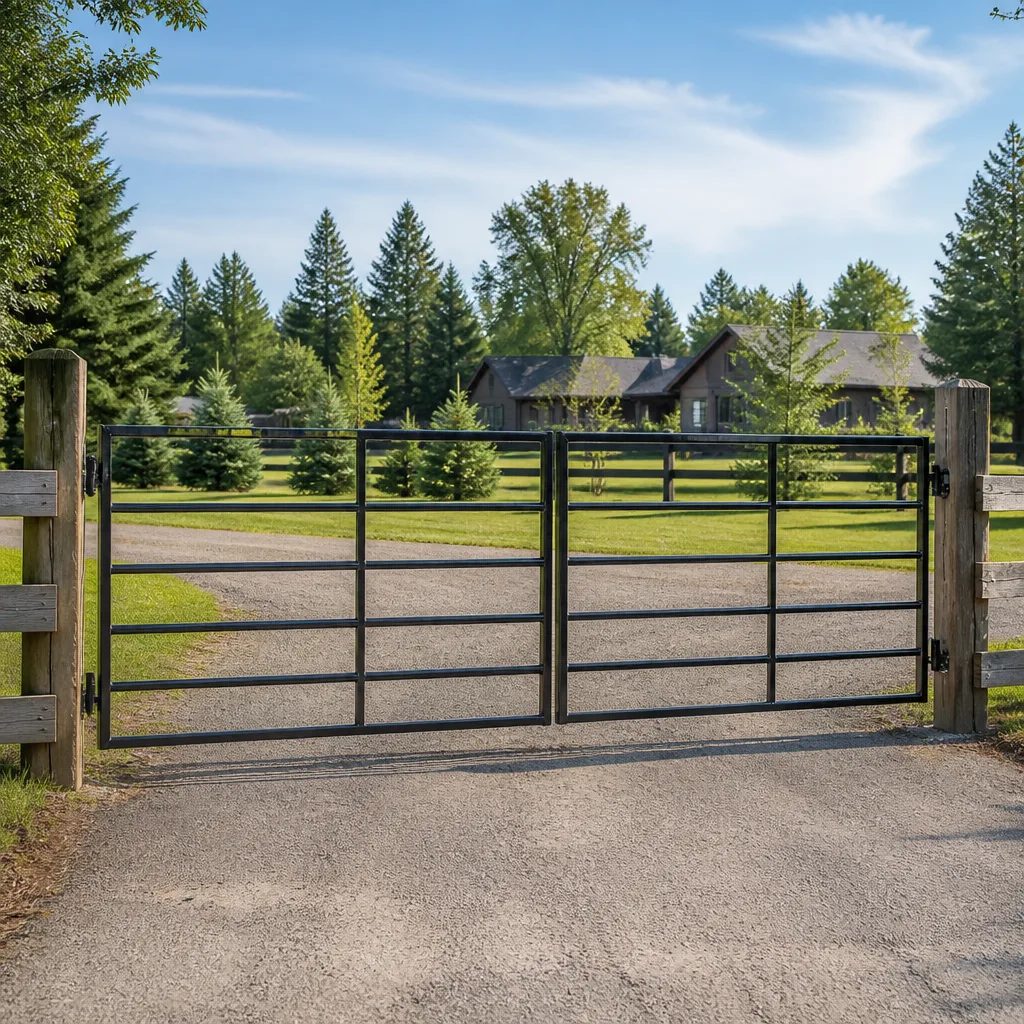 Farm & ranch
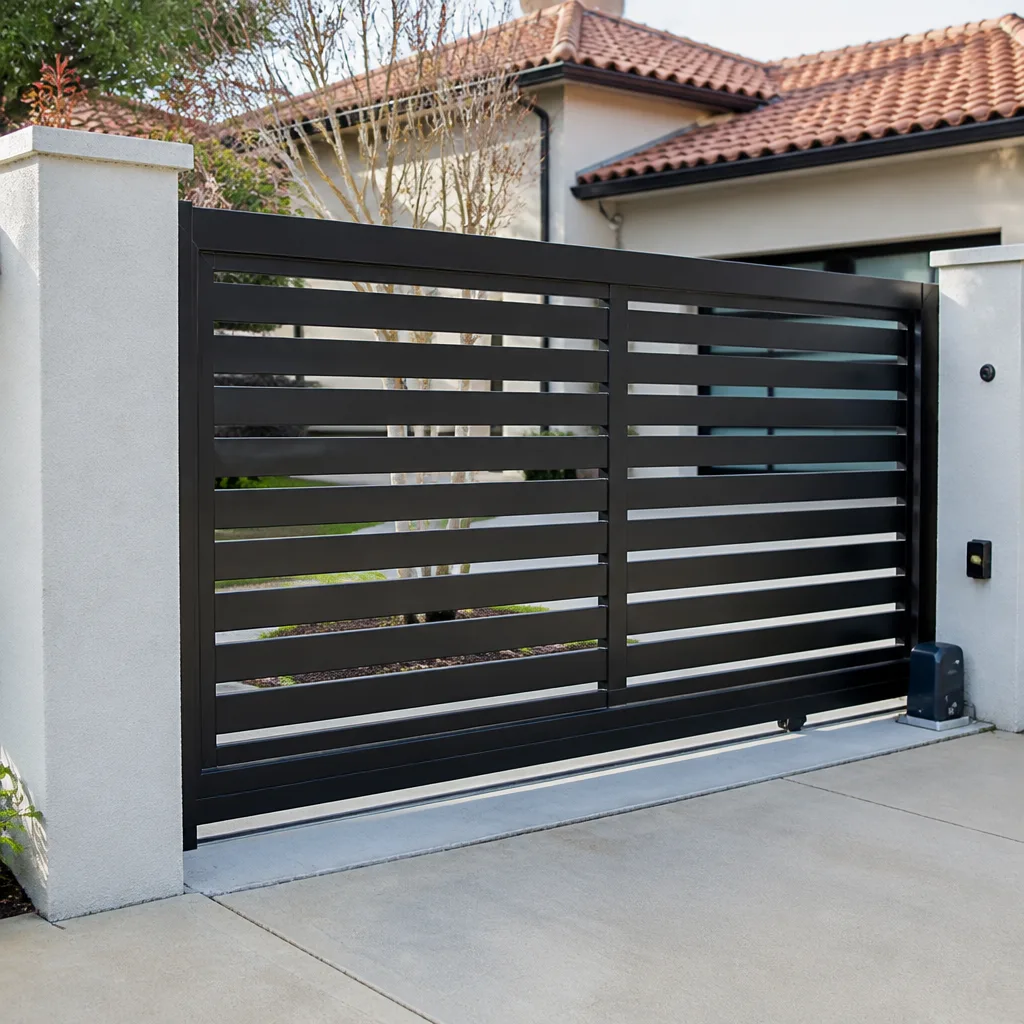 Sliding driveway gates
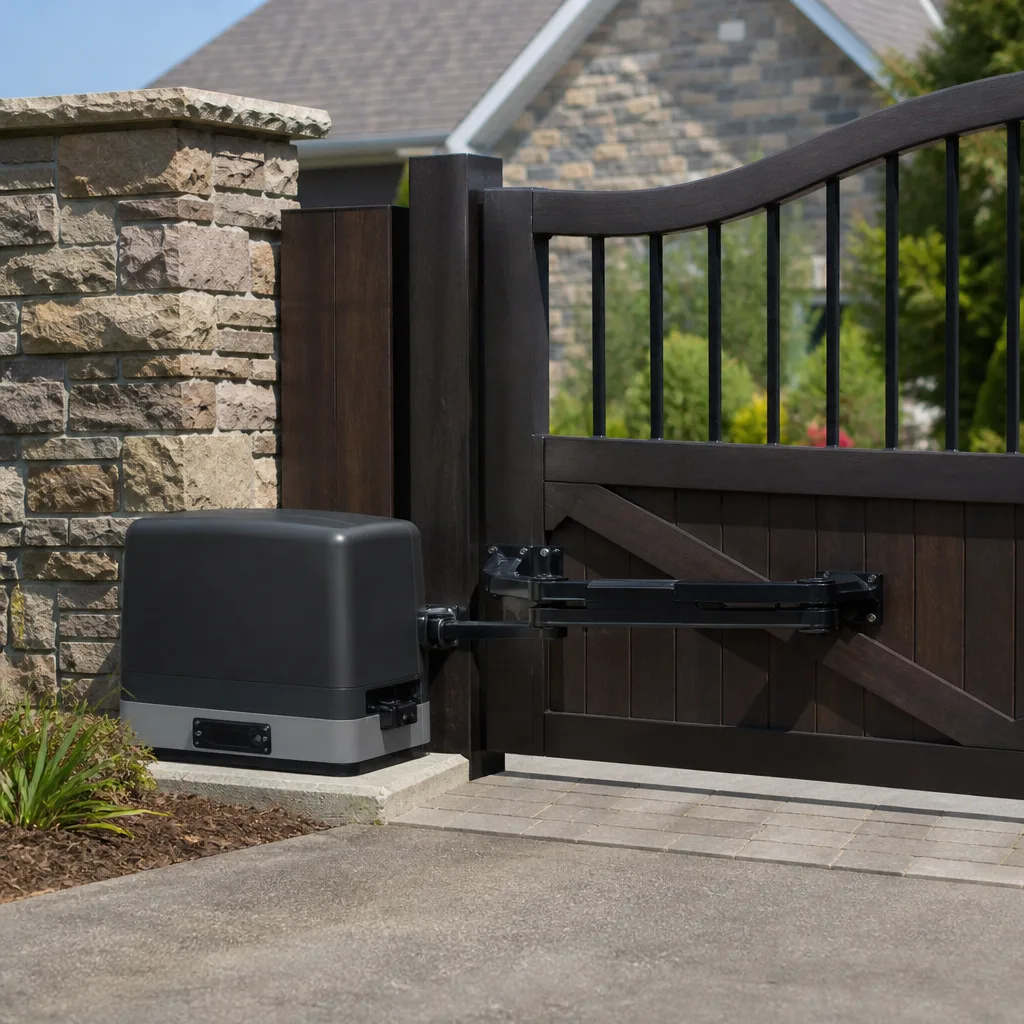 LiftMaster operators
Free on-site gate assessment - hinges, posts, and your LiftMaster or Nice gate operator checked before anything is quoted
The assessment is free and the quote is the invoice.
Get your free estimateThe Complete Guide to Gate Repair in Lynwood
A gate that stops mid-swing isn’t just a hinge problem. In our experience, the mechanical symptom traces back to an electrical or programming fault in the majority of service calls. Treating the visible fault while ignoring the system behind it is the most expensive mistake a Lynwood property owner can make. This guide maps every component, every common failure point, and when each one actually needs professional hands. You’ll finish it knowing what to check, what to describe when you call, and what you should never touch yourself.
Quick Answer
Gate repair in Lynwood typically involves diagnosing the operator, wiring, or mechanical hardware rather than simply fixing the visible symptom. Most residential gates can be repaired the same day by a gate-only specialist, but the key is identifying whether the fault is mechanical, electrical, or programming-related before any parts get replaced. The estimate is free, and the written price is agreed before any work starts.
Styles & brands we work with
- Wrought iron
- Wood & steel frame
- Farm & ranch
- Sliding driveway gates
- LiftMaster operators
Table of Contents
- How a Gate System Actually Works
- The Most Common Gate Failure Points in Lynwood
- Repair vs. Adjustment: Why It Matters
- How Lynwood’s Housing Stock Affects Gate Repairs
- How to Read Your Gate Operator’s Fault Code
- What Requires a Permit in Los Angeles County
- What You Can Check Yourself vs. What Needs a Technician
- Choosing the Right Operator for a Lynwood Property
How a Gate System Actually Works
A gate is not a single mechanism. It is a chain of components, and any weak link stops the whole system. Understanding the chain is what separates a real diagnosis from guesswork. Here is the component order for the two gate types you will see on residential Lynwood properties.
Swing Gate Systems
On a swing gate, an electric operator turns a drive arm or a piston. The operator is bolted to a concrete pad or a steel post. The arm then pushes or pulls the gate leaf. Hinges carry the weight, and the post carries the hinges. Limit switches inside the operator tell the motor where open and closed are. A control board reads commands from keypads, remotes, intercoms, or vehicle loop detectors. Safety edges or photocells watch the swing path and tell the board to stop or reverse. When a swing gate fails, the fault can live in any one of these links.
Slide Gate Systems
A slide gate rolls on a track, or it is a cantilever design that rides on rollers set into posts. The operator drives a gear and chain, or a belt, to move the gate leaf. Guide rollers keep the trailing edge stable. The control board coordinates the motor with the safety loop detectors and the access devices. On commercial Lynwood properties, a slide gate often carries a barrier arm or a keypad for entry control. When a slide gate binds or stalls, the issue is usually track debris, roller wear, or a gear that has lost its mesh, but the operator’s torque limiter may also be the reason it stops.
Every component is replaceable, and that is good news. A failed swing arm does not mean a new gate. A dead control board does not mean a new operator. The trick is replacing the right part. That is where specialist diagnosis earns its keep.
The Most Common Gate Failure Points in Lynwood
Gate failures cluster around a handful of predictable points. In our service experience across Lynwood, here are the ones we see most often, listed from the gate leaf inward.
- Gate leaf sag or drag: A gate that scrapes the driveway or no longer lines up with the latch has a hinge or post problem. On welded steel gates, the weld fails before the hinge pin. On aluminum gates, the leaf flexes.
- Post movement: The gate post is the foundation of the whole system. A post that has shifted changes the gate’s swing arc. In Lynwood, post movement is common in setbacks with shallow concrete and on properties built on older fill.
- Operator gear and drive failure: Plastic gears inside residential operators strip over time. The motor still hums, but the gate does not move. This is the classic “I hear it trying” call.
- Control board faults: Power surges, moisture, and age kill control boards. A board fault often looks mechanical because the gate behaves erratically, moves an inch, then stops, or opens on its own.
- Safety edge and photocell failure: A gate that reverses for no reason, or refuses to close, usually has a dirty or misaligned photo eye, or a torn safety edge.
- Wiring faults: Underground wire paths in older Lynwood homes degrade. Insulation cracks, moisture gets in, and the low-voltage signal to the board becomes intermittent. This is the hardest fault to trace without a meter.
- Access device failure: Keypads, remotes, intercoms, and vehicle loops all talk to the board. When the gate opens manually but not from the remote, the fault may be in the access side, not the operator.
Note how many of these are electrical or programming issues. That is the point we made up front. Most gate problems are not the metal leaf. They are what commands the metal leaf to move.
Repair vs. Adjustment: Why It Matters
In gate work, a repair and an adjustment are different jobs with different price tags. Knowing which one you have saves you a service call and keeps you from paying for a diagnosis you could have done yourself. Many Lynwood homeowners call us for a repair when what they actually need is an adjustment, and sometimes the opposite is true.
An adjustment is a setting change. It means the hardware is intact, but the operator or gate leaf is out of tune. Examples include:
- Limit switches that stop the gate too early or too late.
- Force settings that are too sensitive, causing the gate to reverse mid-travel.
- Hinge bolts that have worked loose, causing the gate to sag an inch.
- Photo eyes that are dusty or slightly out of alignment.
- A keypad code that needs reprogramming.
A repair is a part replacement or a structural correction. Examples include:
- A torn or burned-out actuator arm.
- A stripped plastic drive gear inside the operator.
- A failed capacitor or transformer on the control board.
- A cracked weld on the gate leaf.
- A post that has moved out of plumb.
The confusion arises because a misadjusted limit switch can look like a dead motor. A gate that stops six inches from fully closed might be a limit setting, or it might be a failing gear. When the technician arrives and only turns a screw, that is an adjustment. When he replaces a part, that is a repair. The written estimate we give before work starts makes the distinction clear, so you know what you are paying for and why.
How Lynwood’s Housing Stock Affects Gate Repairs
Lynwood’s residential lots were largely built before 1990. Many driveways are narrower than modern suburban standards, and the gates that serve them were retrofitted onto existing concrete rather than set on posts poured specifically for gate hardware. That has real consequences for gate work.
First, post anchoring is less forgiving. A gate post set into a four-inch residential walkway slab does not carry the same load as a post set into a dedicated footing. When a heavy steel or composite gate leaf swings on a post anchored in shallow concrete, the post flexes. Over years, the flexing works the anchor bolts loose or cracks the concrete. A replacement post may need a deeper footing, which changes the scope of the job.
Second, motor sizing matters more on older driveways. A swing gate with a long leaf or a heavy decorative panel needs a motor rated for the duty cycle. On an older Lynwood driveway that slopes or has a rise at the apron, a motor that works perfectly on flat ground may stall on the incline. This is why a gate repair quote based only on “operator replacement” is incomplete. The technician should check the gate’s weight, its swing distance, and the incline before choosing a motor. We do, because choosing the wrong one means a repeat failure in six months.
Third, older electrical service can be a factor. Some Lynwood homes have exterior outlets that are no longer protected by a dedicated GFCI circuit, or the gate wiring was run without conduit. A new operator install often needs a clean, dedicated power run. That is part of the scope discussion, not an upsell. It is the difference between a gate that works for a year and one that works for fifteen.
How to Read Your Gate Operator’s Fault Code
Most modern gate operators have a control board with an LED display or a sequence of blinking lights. The fault code tells you which part of the system the board thinks is wrong. Reading it before you call means the technician arrives with the right parts and a clear plan. Here is a numbered approach.
- Find the board. The control board is inside the operator housing. Open the operator cover. On most residential brands, you will see a small circuit board with a digital display or a set of indicator LEDs.
- Count the blinks or read the number. If it is a LiftMaster or DoorKing board, you will see a single-digit code or a pattern of flashes. A “1” or one blink often means a limit switch issue. A “2” or two blinks often means a force reversal or a safety input. A “3” or three blinks often points to a stuck key or a remote input fault.
- Write down the exact pattern. Do not try to clear the code. Do not power-cycle the operator first. The code is the evidence. Write it down before anything else.
- Check the safety devices. Many codes point to a photo eye or a safety edge. Look at the photo eye. Is the lens clean? Is it pointing at the reflector or receiver? Is there a stick, a leaf, or a spider web in the path? Clear the path and see if the code clears.
- Call with the code in hand. When you call Gate Repair Lynwood, tell us the brand and the fault code. That single piece of information tells us which system we are dealing with and often which part to bring.
A note on older operators: many pre-2000 operators do not store fault codes. They have simple mechanical relays and physical limit switches. If your operator has no display and no blinking LED, that is normal for its age. The diagnosis is then done by sound and meter, which is exactly what a technician on site will do.
What Requires a Permit in Los Angeles County
Lynwood sits within Los Angeles County jurisdiction for building permits. Whether a gate job needs a permit depends on what you are doing. In general terms, here is the practical split.
Permit likely not required:
- Replacing a gate operator with a like-for-like unit on the same pad.
- Replacing a gate leaf on the same posts.
- Replacing control boards, safety edges, photo eyes, or remotes.
- Adjusting hinges, limits, or force settings.
Permit or plan check likely required:
- Setting new posts in a new location.
- Installing a gate across a driveway that did not previously have one.
- Adding an automated operator to a manual gate where the gate was not built for automation.
- Any commercial gate installation with vehicle loops cut into the roadway.
The line is not always bright. A new gate hung on existing posts, with a new operator, may not need a permit at all. The same gate with new posts poured at a new setback line may trigger a plan check with the city’s building division. The safest path is to call the city and describe the scope. We do not file permits ourselves, but we can tell you what the scope actually is, which is half the answer the city asks for.
For commercial properties in Lynwood, the standard is higher. Any vehicular gate serving the public, employees, or tenants should have functioning safety edges, photo eyes, and emergency release hardware. If a repair involves disabling or replacing those, do not run the gate manually for days while you wait. A gate that operates without its safety devices is a liability, and the county treats it as one.
What You Can Check Yourself vs. What Needs a Technician
Some gate tasks are homeowner-appropriate. Others are not. The line is drawn by voltage, weight, and stored energy. Here is a clear split for a Lynwood homeowner or property manager.
Safe to check yourself:
- Visual track inspection. Look for debris, pebbles, or vegetation touching the track or the gate’s path.
- Battery replacement in remotes. If the remote works only at close range, the battery is the first suspect.
- Photo eye cleaning. Wipe the lenses. Clear the path. Check for a bent bracket.
- Manual release check. Most operators have a release handle or key. Follow the manufacturer’s instructions and verify the gate moves freely by hand. If it does not, the problem is mechanical, not electrical.
- Keypad button check. If one button sticks, the whole keypad can fail. A sticky button is a cheap replacement part.
Leave to a trained technician:
- Any panel or board that runs on line voltage. The operator converts 120VAC to low voltage for the board, but the incoming side is live. Opening a live operator without knowing which side is hot is a real shock hazard.
- Heavy gate leaf work. A swing gate leaf that weighs hundreds of pounds carries more than enough force to crush a hand or pin a leg. When hinges or post brackets fail, the leaf must be properly supported before any bolt comes out.
- Slide gate roller and gear replacement. A slide gate that comes off its track is a crushing hazard and a runaway risk. If the rollers are shot, the gate should be blocked and supported before work begins.
- Any fault that returns after a reset. A fault that clears and then reappears is a system problem, not a one-time glitch. Power-cycling repeatedly can mask the underlying issue and make the eventual repair more expensive.
When a gate’s moving parts have stored energy or its wiring has line voltage, the right move is a call. We work on electric gate repair every day, and a safe diagnosis starts with the right tools and the right shutoff procedure.
Choosing the Right Operator for a Lynwood Property
When a gate operator has failed beyond repair, or you are automating a gate for the first time, the operator choice depends on three things: the gate’s weight and length, the daily cycle count, and the access devices you want to run. Here is how we think about it across the brands we service in Lynwood.
Residential single-family gates. A light-duty operator works for a standard single-leaf swing gate under about 300 pounds. Mighty Mule and Ghost Controls products fit this category. They run on 12V or 24V DC, use a simple control board, and pair with basic remotes and keypads. If the Lynwood driveway is flat and the gate is used fewer than 20 cycles a day, this is the right tier.
Heavier residential and small commercial gates. A mid-duty operator like a LiftMaster or Linear handles a heavier leaf, a longer swing arm, or a higher cycle count. If the property has a two-leaf gate, a solid steel or vinyl-over-steel leaf, or daily use above 30 cycles, this tier is the safe floor. The motor and gear train are built for repeat work, and the board supports more safety inputs.
Commercial and high-cycle gates. A FAAC, BFT, Elite, or DoorKing operator is the professional-grade choice. These units are built for hundred-cycle days, vehicle loop detectors, intercom tie-ins, and building access integration. On a commercial Lynwood property, a slide gate with an operator in this class is the standard, not the exception. The duty cycle rating alone is the difference between a gate that runs for years without attention and one that burns out a gearbox annually.
The brand matters less than the duty cycle and the safety package. A gate that moves the same leaf but uses a residential operator in a commercial setting will fail early. We see it on Lynwood commercial properties more than anywhere else, and the fix is almost always a proper mid-duty or commercial operator. The free estimate we give before any install includes the cycle count, the gate weight, and the operator tier that matches.
Common Mistakes to Avoid
- Replacing the operator before checking the gate leaf. If the gate drags or binds, a new operator will fight it and fail the same way. The gate must swing or slide freely first, on its hinges or rollers, before motor work means anything.
- Clearing a fault code without writing it down. The code is the only diagnostic record the board gives you. Clearing it to see if the problem “goes away” erases the evidence. Write it down first, then reset.
- Ignoring the manual release. If the gate does not move freely by hand with the operator released, the problem is mechanical. Replacing the operator or adjusting the board will not fix a gate leaf that cannot physically move.
- Buying a “same-brand” operator online without checking compatibility. Older operators and newer safety standards do not always match. A board from a different model year, or an operator kit that lacks the right safety inputs, can fail a code inspection or simply not work.
- Treating a slide gate track problem as a motor problem. A slide gate that stalls partway often has a track obstruction, a worn roller, or a gear wear issue. Replacing the motor without checking the mechanical path is a wasted expense.
- Running a gate with the safety edges disconnected. A gate that closes on a vehicle or a person because someone bypassed a safety edge is a serious event. If a safety device fails, leave the gate in manual mode or closed until a technician repairs it.
- Guessing at permit requirements. Assuming a gate job is “just maintenance” when the city sees it as a structural change can cause a stop-work order or a failed resale inspection. Ask the city, or ask us to help you describe the scope accurately before you call them.
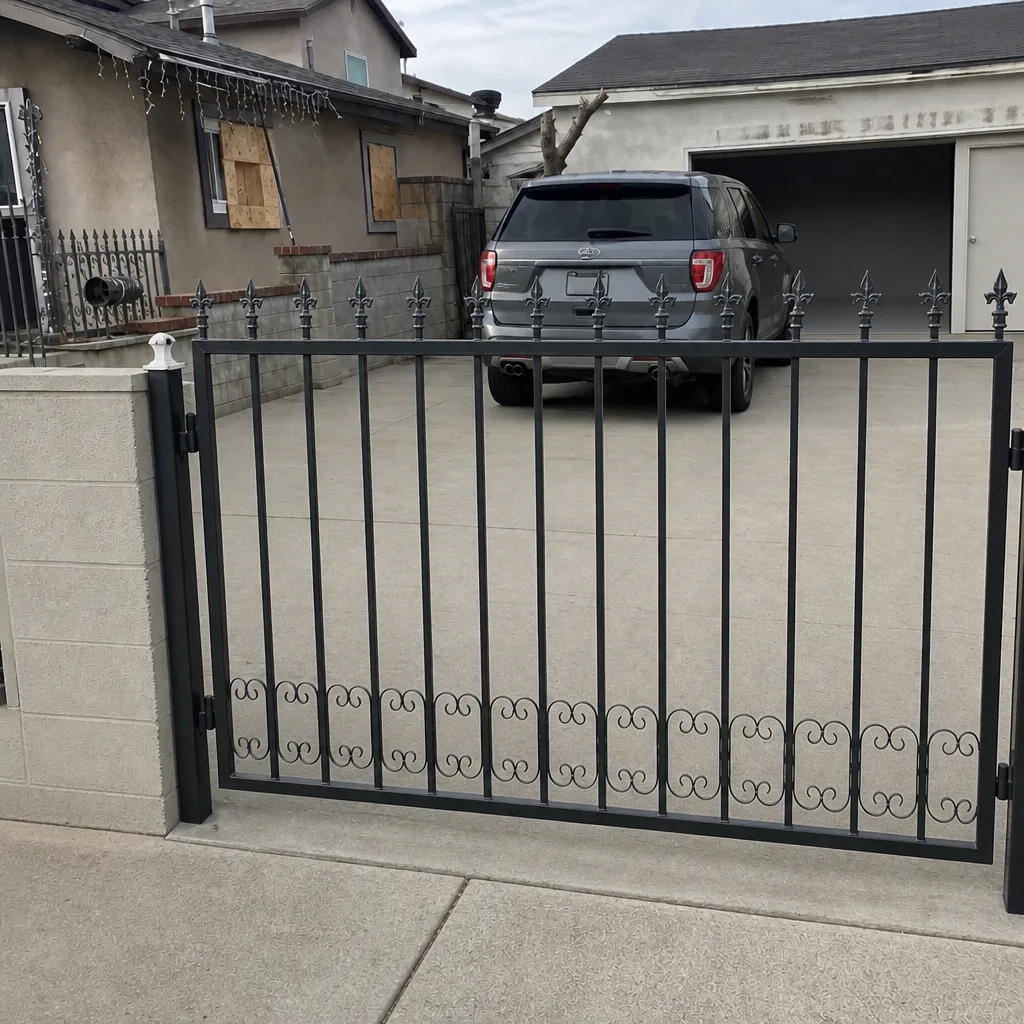
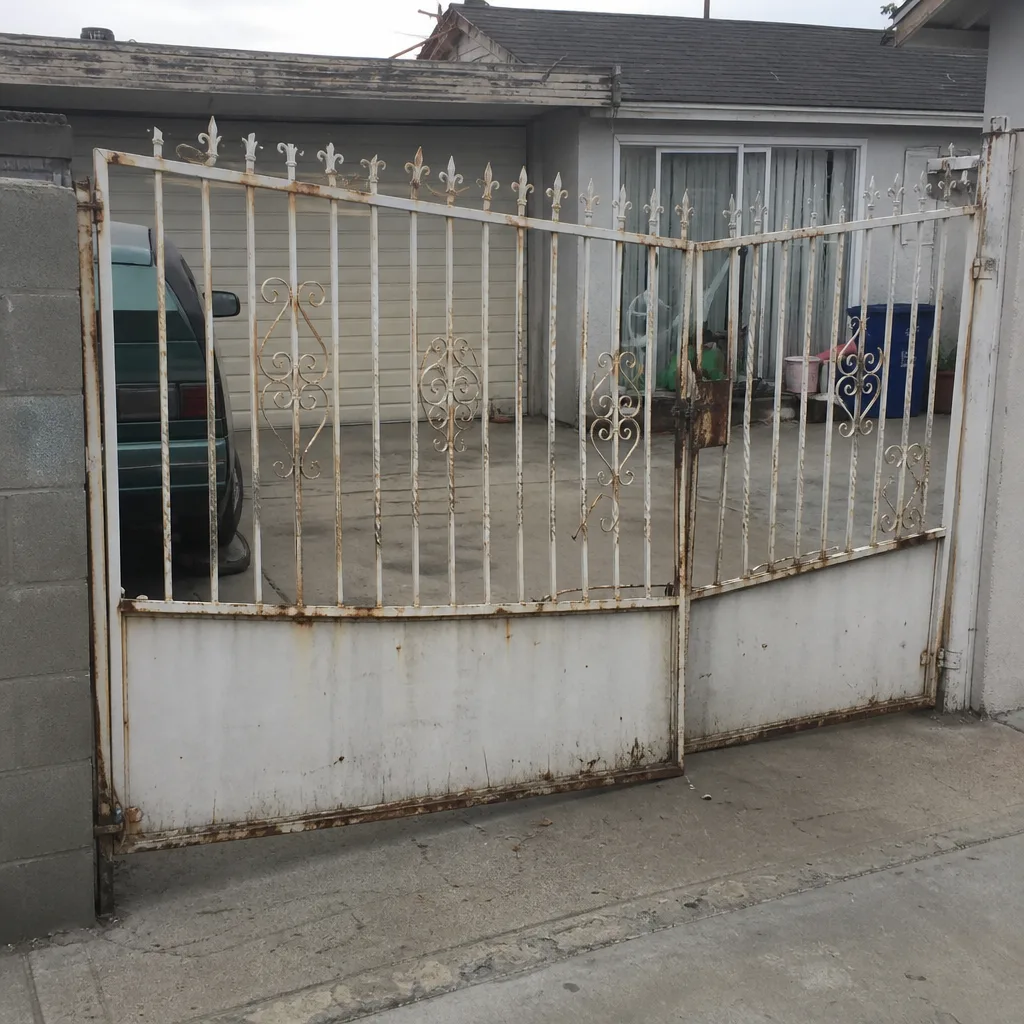
See the difference
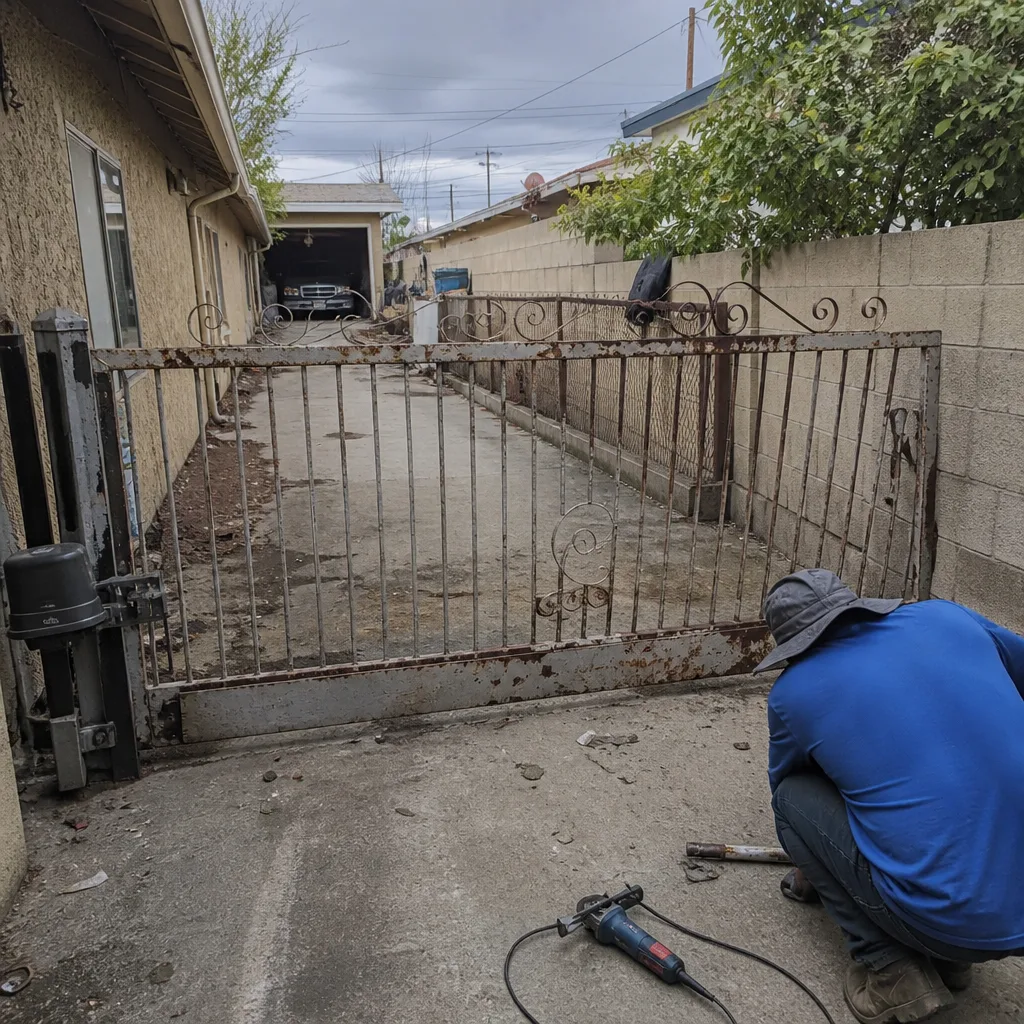 Before
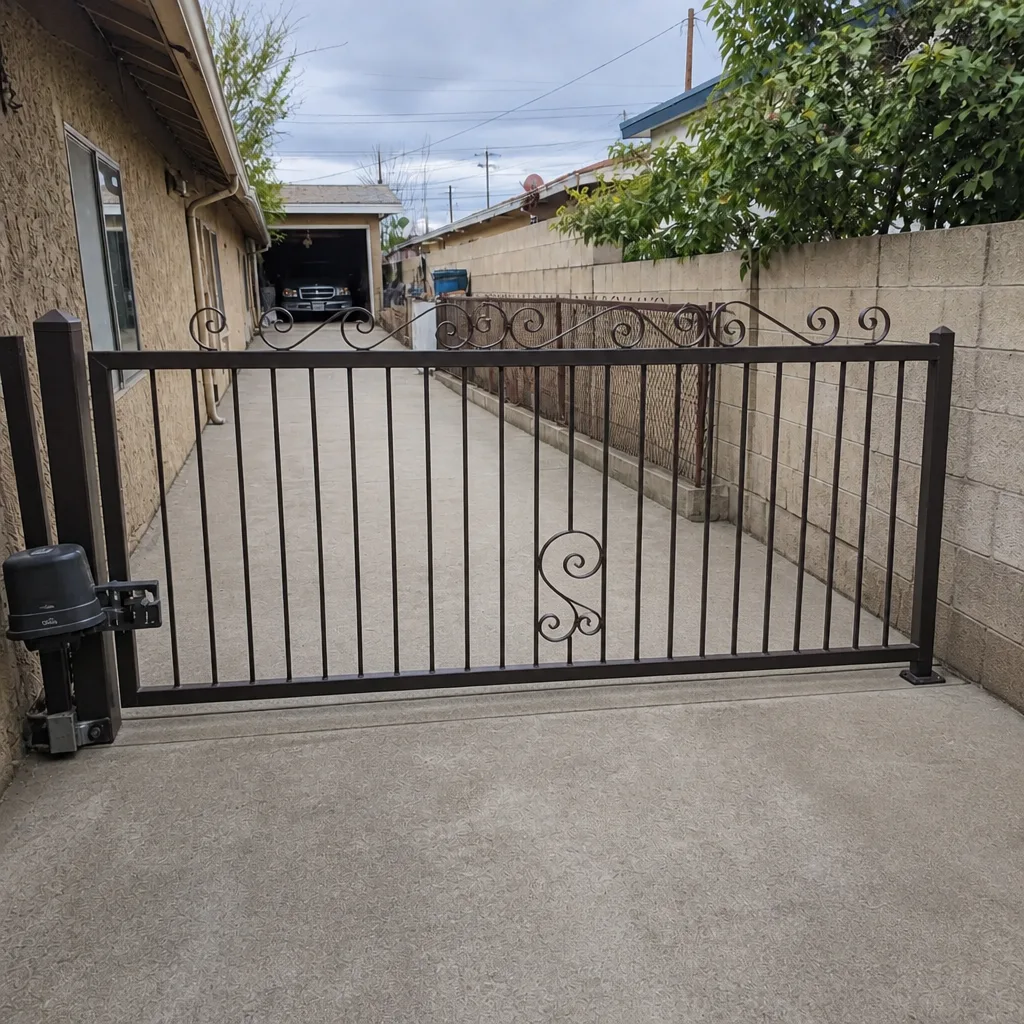 After
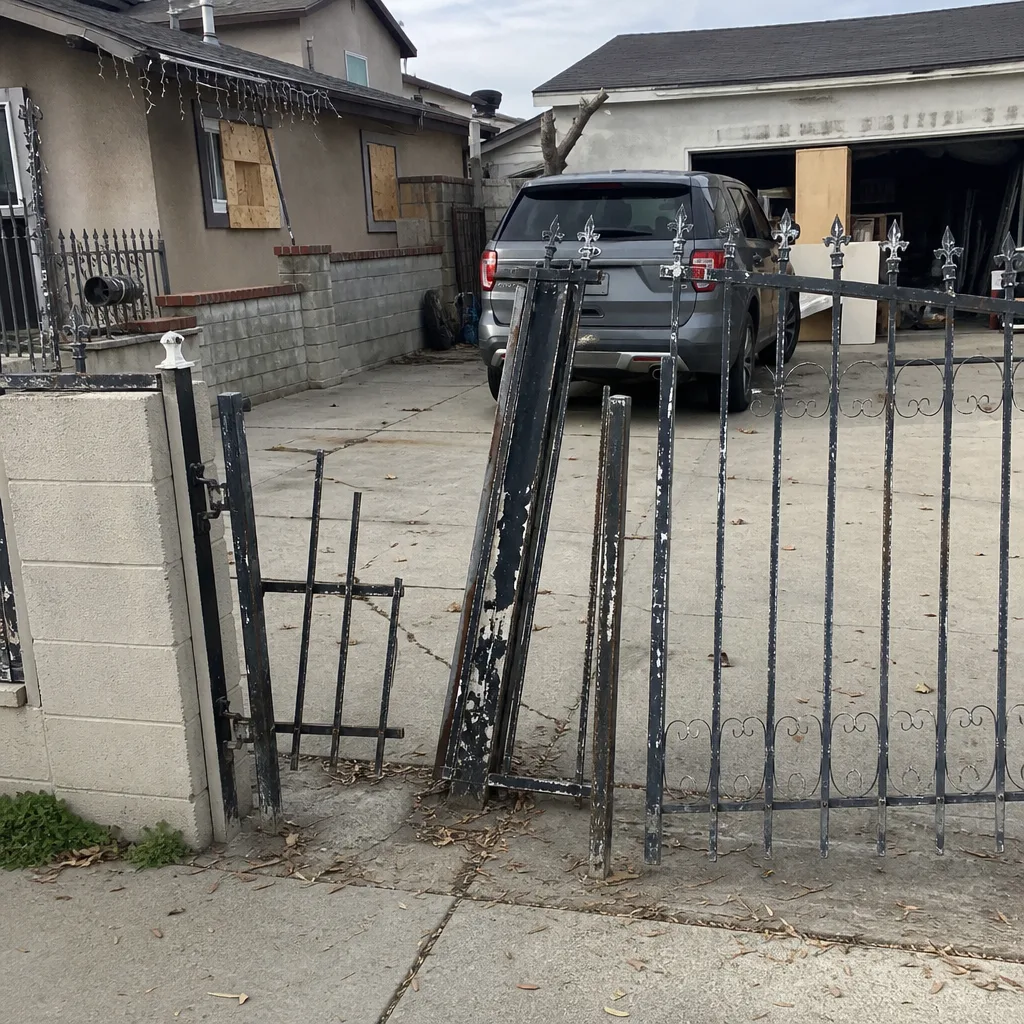 Before
 After
 Before
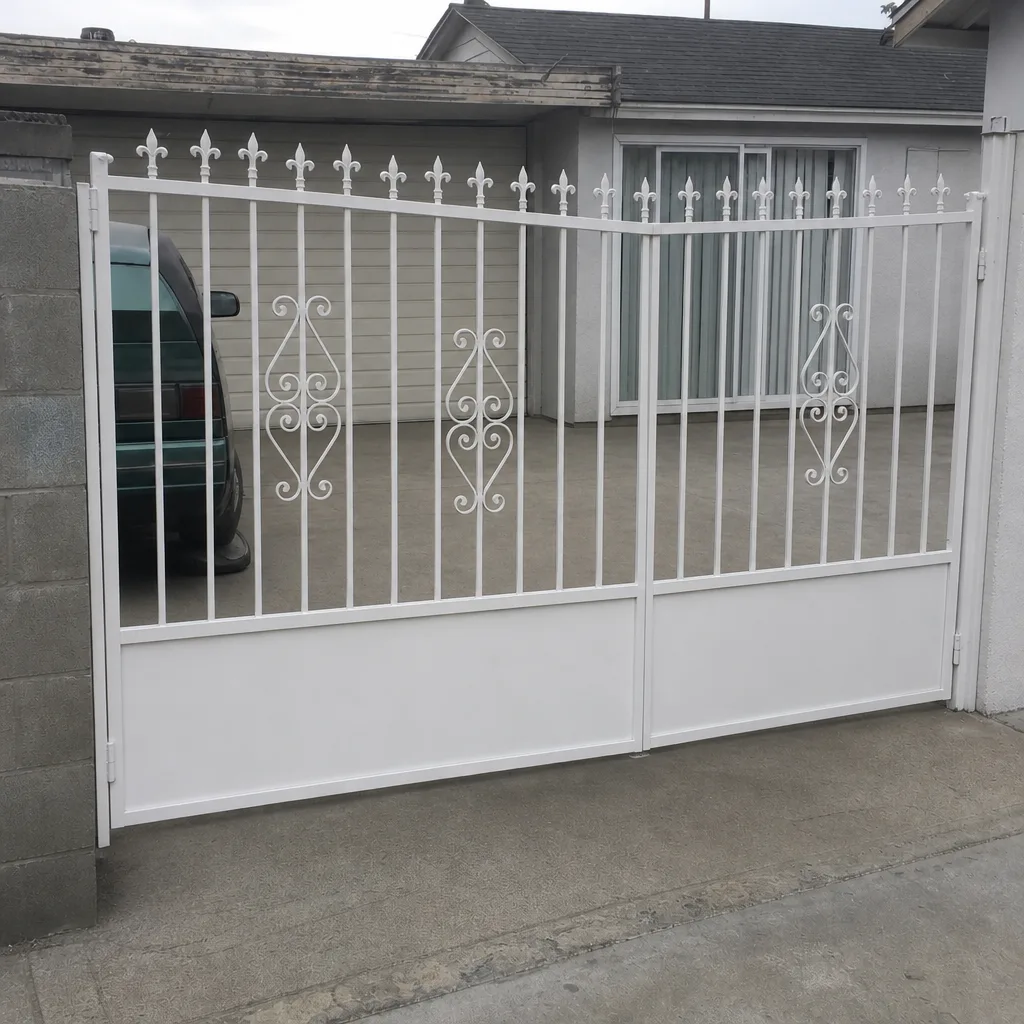 After
When to Call a Professional
Call a gate specialist when the fault is electrical, when the gate leaf is heavy enough to cause injury, when the fault code points to the board or the safety circuit, or when you have already checked the obvious mechanical blockers and the gate still does not work. A gate that opens on its own, closes on its own, reverses unpredictably, or makes a grinding noise from the operator is a system problem, not a hinge problem. Do not keep resetting it and hoping. A specialist visit costs less than a misbought operator, and you get the diagnosis that ends the cycle. Lynwood property owners can call Gate Repair Lynwood at (855) 360-4375 for a free estimate. We answer 24/7. Fast dispatch from 7am to 7pm, Sunday through Friday.
Frequently Asked Questions
Gate repair in Lynwood is priced per job by written estimate, because the cost depends on whether the fault is an adjustment, a part replacement, or a full operator swap. A simple limit adjustment is the least expensive, a replacement safety edge or photo eye is moderate, and a new commercial operator is at the top of the range. The estimate is free, and the price is agreed before any work starts. Call (855) 360-4375 for an exact quote.
Yes. A gate that opens fine but refuses to close is almost always a safety input problem: a photo eye that is blocked or misaligned, a safety edge that is torn, or a force setting that is too sensitive. The board is receiving a signal that says “something is in the way” and refuses to close. In some cases it is a failed safety edge or a wiring short. The fix is a diagnostic visit, not a new gate.
A swing gate repair focuses on hinges, post anchors, and the actuator arm that pushes the leaf. A slide gate repair focuses on the track, rollers, guide wheels, and the gear or belt drive. Their operators are different, their safety devices are mounted differently, and their failure points are different. A technician who only knows swing gates will misdiagnose a slide gate quickly.
Yes. We work on Mighty Mule and Ghost Controls residential operators, and we also service LiftMaster, DoorKing, Elite, FAAC, BFT, Linear, and Viking systems. If your operator is on that list, we know the board, the fault codes, and the common failure points. If it is not on that list, we will tell you honestly before scheduling.
An unauthorized opening is usually a stray remote signal, a stuck keypad button, a shorted input wire, or a failing control board. Disconnect the operator and run the gate manually until a technician can trace the input. Call (855) 360-4375. We answer 24/7. A call outside dispatch hours is booked into the next opening, Sunday through Friday, 7am to 7pm.
Most repair-only work, like replacing an operator, a board, or a safety edge, does not need a permit. New post installations, new gate locations, and commercial vehicle loops often do. The city’s building division makes the final call, but we can help you describe the scope accurately before you ask them.
The Bottom Line
Gate repair in Lynwood is a system diagnosis, not a single-part fix. The gate leaf, the posts, the operator, the control board, and the safety devices all talk to each other, and a fault in any one of them shows up as a problem in the others. Reading the fault code, checking the manual release, and knowing whether you are looking at an adjustment or a repair will save you money and keep your gate from being a recurring headache. When the problem is electrical, structural, or just persistent, call a gate-only specialist who already knows your brand. The price is quoted before the work, and the estimate is free. Call (855) 360-4375. We answer 24/7. Fast dispatch from 7am to 7pm, Sunday through Friday.
Written by the team at Gate Repair Lynwood, serving Lynwood since 2011.