
Last updated November 4, 2026
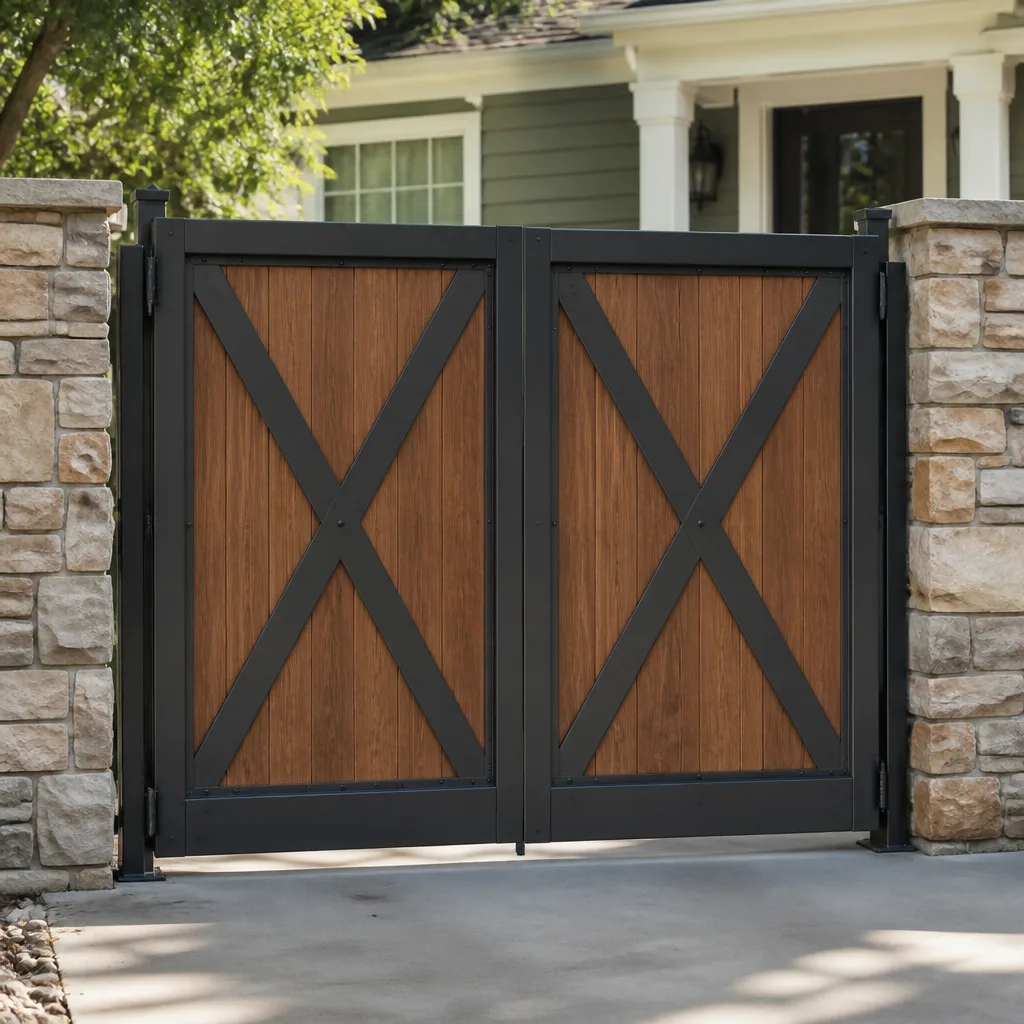 Wood & steel frame
 Wrought iron
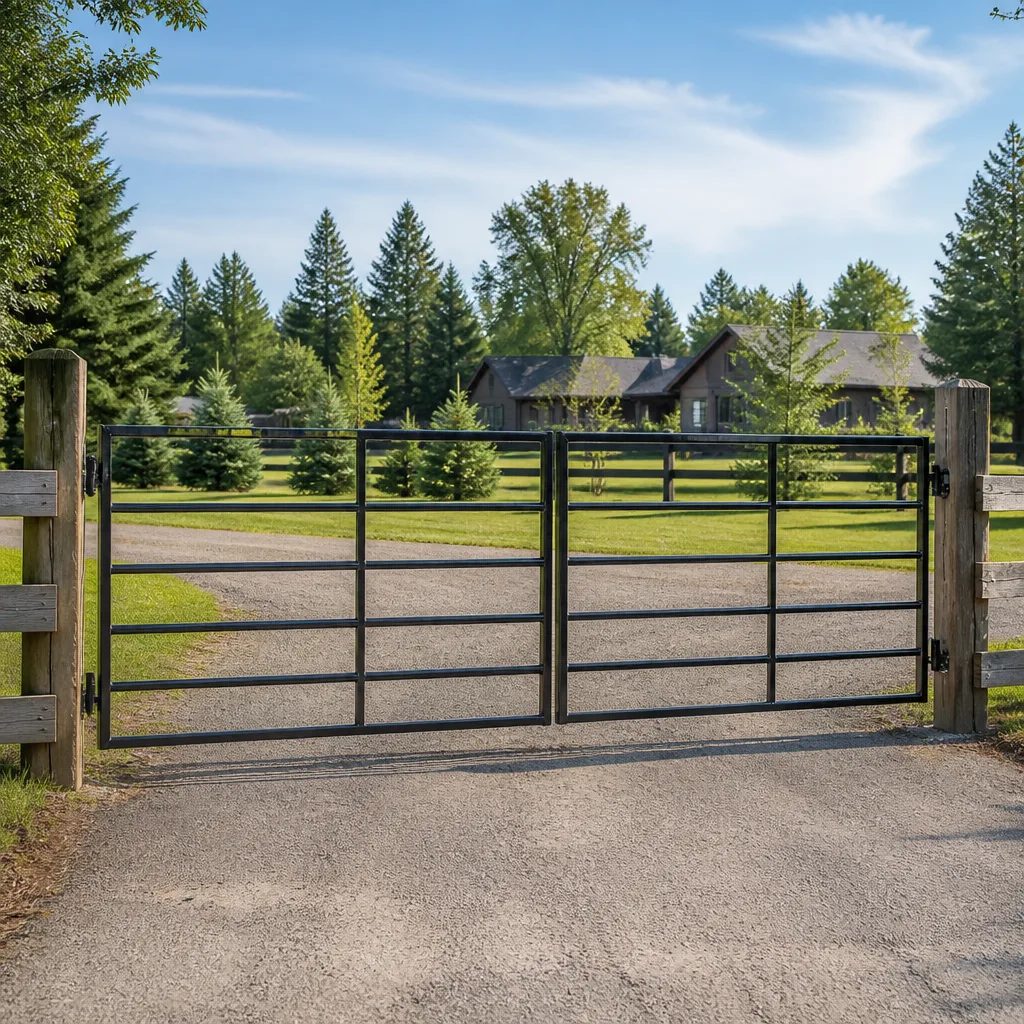 Farm & ranch
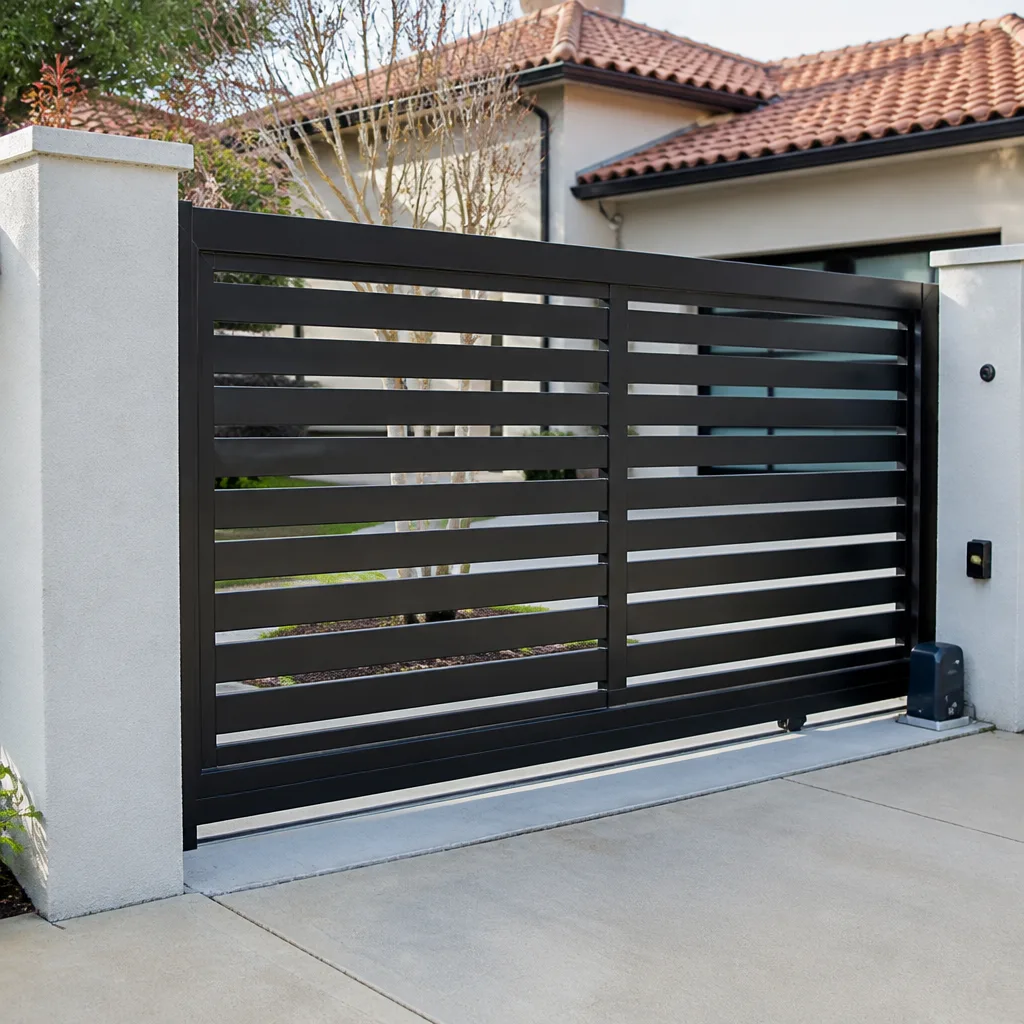 Sliding driveway gates
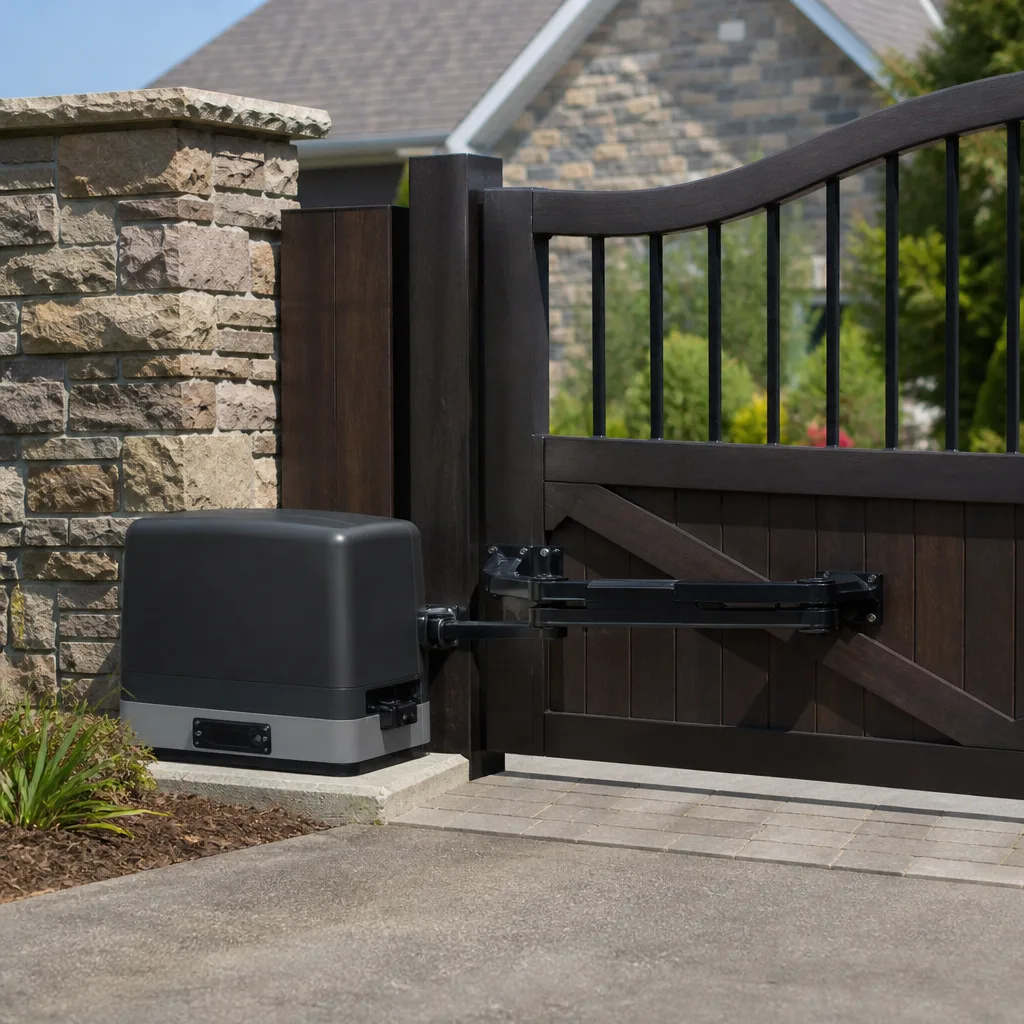 LiftMaster operators
Free on-site gate assessment - hinges, posts, and your LiftMaster or Nice gate operator checked before anything is quoted
The assessment is free and the quote is the invoice.
Get your free estimateSeasonal Gate Repair Care for Lynwood: Year-Round Homeowner’s Guide
Most homeowners think gate maintenance is a spring-and-fall task, like cleaning gutters or checking the furnace. In Lynwood, that thinking is exactly backwards. Our climate doesn’t punish gates with ice and snow, so people assume the hardware can coast through the year on autopilot. What actually happens is subtler and more damaging: nine months of dry heat push motors past their rated duty cycle, then December rains shift the clay soil under gate posts just enough to throw a swing gate out of alignment overnight. This guide lays out what to check, when to check it, and how to spot a developing gate problem before it becomes a gate failure, tailored specifically to how gates wear in Lynwood.
Quick Answer
Seasonal gate care in Lynwood comes down to three stress periods, not four seasons. You need a pre-rain checklist in October and November to prepare for soil movement, a summer heat protocol to keep operator boards from cooking inside their boxes, and a Santa Ana wind response for swing gates that catches torque-setting drift before a gust folds the gate or burns out the motor. Each check takes under an hour and prevents most of the repair calls we see all year.
Styles & brands we work with
- Wrought iron
- Wood & steel frame
- Farm & ranch
- Sliding driveway gates
- LiftMaster operators
Table of Contents
- Why Lynwood’s Rainy Season Is the Real Gate Test
- Pre-Rainy Season Checklist (October Through November)
- Summer Heat Protocol for Gate Operators
- Santa Ana Wind Event Prep for Swing Gates
- Post-Rain Inspection: Checking for Post Heave and Misalignment
- Dry Season Lubrication: What the Label Doesn’t Tell You
- Common Mistakes to Avoid
- When to Call a Professional
- Frequently Asked Questions
Why Lynwood’s Rainy Season Is the Real Gate Test
Lynwood sits on soil with a high clay content, and clay does something particular when it gets wet: it expands. After eight or nine dry months, the ground under a gate post has contracted and settled. When the first real December rain soaks in, that soil swells and shifts, sometimes a quarter inch or more. A quarter inch at the post translates to a visible sag at the far end of a twelve-foot gate leaf.
This is why we see a spike in gate repair calls in December and January that have nothing to do with the gate hardware itself. The hinges are fine. The operator is fine. The post has simply moved, and now the gate drags on the ground or the latch no longer lines up.
What makes this so frustrating for homeowners is that the problem compounds. A gate that drags for a few weeks forces the operator to push harder on every cycle. The motor runs hotter. The gear train wears faster. By February, a gate that only needed a hinge adjustment is suddenly a full electric gate repair with a burned-out board or stripped gear. The soil movement is the trigger; ignoring it is what turns a small job into a big one.
The takeaway is simple: in Lynwood, the rainy season is when you should be most attentive to your gate, not because rain damages gates directly, but because the ground underneath them changes shape. Checking alignment in late November, before the ground is saturated, gives you a baseline. Rechecking after the first heavy rain shows you what moved.
Pre-Rainy Season Checklist (October Through November)
The window between early October and late November is the most important maintenance period of the year for a Lynwood gate. The ground is still dry and firm, which makes adjustments easier and more stable. What you do now determines whether your gate survives the rainy season without a service call.
Run through these steps in order. Most take a few minutes each and need nothing more than a wrench, a lubricant, and a close look.
- Check post plumb and gate level. Use a level on the gate posts and along the top rail of the gate. If the gate already sags or the posts lean slightly inward, mark it now. After the first heavy rain, you’ll compare against this baseline to spot soil movement early.
- Tighten all hinge bolts, bracket bolts, and post mounts. Dry season vibration loosens hardware gradually. A loose hinge in October becomes a bent hinge in January once the gate starts dragging. Tighten everything with the gate in the closed position.
- Inspect the gate wheels or rollers. Slide gates and some swing gates ride on wheels that wear flat spots in dry weather. Spin each wheel by hand and feel for rough spots or wobble. Replace worn wheels before wet soil adds rolling resistance.
- Check the operator arm and mounting hardware. Look for cracks in the arm, slop in the clevis pins, and loose bolts where the operator mounts to the post or pad. Movement in these connections is amplified when the gate meets wet-ground resistance.
- Clean and seal any exposed wiring connections. Rain plus vibration equals corrosion. Check wire nuts, terminal blocks, and any low-voltage connections near the ground. Dry them, tighten them, and use an appropriate outdoor-rated sealant.
- Apply lubricant to pivot points only. Use a dry lubricant or light machine oil on hinge pins, roller axles, and latch mechanisms. Avoid heavy grease, which collects dust during dry months and turns into gummy paste when rain hits.
- Verify the safety edges and photo eyes are clean and aligned. Dust and cobwebs accumulate over the dry season. Wipe the lenses and test the reversing function before the low winter sun angle changes how the sensors read light.
This pre-rain routine applies across the board, whether you have a LiftMaster residential swing operator or a FAAC unit on a commercial driveway. The physics of wet soil don’t care what brand is bolted to the gate. What matters is that every mechanical connection is tight and aligned before the ground starts moving.
Summer Heat Protocol for Gate Operators
Lynwood summers are not extreme by desert standards, but they are long. Operators run in sustained temperatures that approach the upper limit of their rated duty cycle, day after day, for months. The issue isn’t one hot afternoon; it’s the cumulative thermal load that bakes control boards and degrades capacitors over the course of a long dry season.
The key check is the operator box itself. On a summer afternoon, place your hand on the outside of the housing. If it’s uncomfortably hot to hold, the inside is hotter. Control boards rated for 140°F ambient air can see 160°F or more inside a dark metal box sitting in direct sun. That excess heat shortens component life dramatically.
Here’s the summer heat protocol we recommend for any gate operator in Lynwood:
- Shade the operator box. If your operator sits in direct afternoon sun, install a simple shade panel or reposition a nearby plant to block the worst hours. A few degrees of surface temperature reduction makes a real difference over a five-month heat season.
- Check thermal protection behavior. If your gate stops working in the late afternoon and runs fine again in the evening, that’s the motor’s thermal overload tripping. It’s doing its job, but repeated trips mean the motor is working harder than it should or the duty cycle is being exceeded.
- Listen for labored operation. A motor that strains audibly on every cycle is generating extra heat. That’s often a hinge binding, a low battery, or a gate that’s drifted out of alignment. Fix the mechanical issue and the motor runs cooler.
- Verify ventilation ports are clear. Many operators have small vents at the bottom or sides. Dust, cobwebs, and nesting insects plug them over the dry season. A minute with a brush keeps air moving through the enclosure.
- Check the battery, if equipped. Backup batteries hate heat. If your operator has a battery backup, check it for swelling or deformation each June and August. A swollen battery in a hot box is a failure waiting to happen.
We see more failed BFT and Linear control boards in August and September than any other time of year. The pattern is almost always the same: a heat-soaked enclosure, a marginal capacitor, and one more hot afternoon that finishes it. The fix is prevention, and prevention is shade, ventilation, and catching mechanical drag before it loads the motor.
Santa Ana Wind Event Prep for Swing Gates
Santa Ana winds are the most predictable unpredictable event in Lynwood. They arrive in fall and winter, gust for a day or three, and then disappear. For a swing gate, they matter in two ways: wind load on the gate leaf itself, and the torque setting on the operator that has to overcome that load.
A solid-panel swing gate is a sail. A 30 mph gust against a ten-foot solid gate can generate hundreds of pounds of force at the latch edge. If the operator’s torque setting is too high, the gate pushes back against that wind rather than stopping or reversing. Something has to give, and it’s usually the gear train, the hinge, or the gate frame itself.
Before wind season, typically September through November but possible any time, check these items:
- Confirm the operator’s obstacle detection still works. Test it with a firm hand on the gate edge as it closes. If the gate keeps pushing rather than stopping or reversing, the sensitivity is set too high for wind season.
- Adjust torque or force settings to the minimum that reliably moves the gate. A gate that runs fine on a calm day with a lower force setting will protect itself on a windy day. If the motor strains at the lower setting, look for a mechanical issue rather than cranking the force back up.
- Check the latch and drop rod. Mid-swing, wind pushes the gate. At rest, wind rattles it. A play-free latch and a drop rod that seats firmly keep the gate from slamming against its stops during gusts.
- Inspect leaf structure for cracks or loose pickets. Wind flexes metal. Small cracks at weld points grow quickly under repeated cyclic loading. Touch up cracks before they set the stage for a metal fatigue failure.
Property owners with solid vinyl or wood-insert gates need to pay special attention. Those panels catch more wind than open ornamental designs, and the operator feels every bit of it. If your gate is solid and faces east toward the open areas beyond Lynwood, wind load is a real factor in your operator’s lifespan.
Post-Rain Inspection: Checking for Post Heave and Misalignment
After the first significant rain of the season, and again after any stretch of several consecutive rainy days, walk out to your gate and look at it as if you’re seeing it for the first time. Post-rain inspection is about catching small shifts before they compound.
The first thing to check is the gap at the bottom of the gate. Walk the full length and watch for variation. If the gap changes by more than half an inch from hinge end to latch end, the gate has moved. Compare it to your pre-rain baseline. A quarter-inch shift at the post can show up as an inch or more at the far end of the leaf.
Next, observe a full open and close cycle. Listen for scraping, watch for hesitation, and feel for vibration. A gate that dragged on the ground but was adjusted before the rain may now ride clear, or it may drag worse. The direction of the change tells you which way the post moved.
If the gate is dragging, here’s how to address it without replacing hardware:
- Identify the low point. Walk the gate and mark where it contacts the ground. If the drag is at the latch end, the hinge post has settled or the gate leaf has bent. If it’s at the hinge end, the latch post has moved.
- Check hinge bolts first. Many post-rain misalignments are actually hinge bolts that loosened over the dry season and slipped when the soil shifted. Tightening them can restore most of the gate’s level.
- Adjust the hinge shims. If tightening doesn’t do it, thin shims behind the hinge leaves can correct up to about three-quarters of an inch of sag. This is a one-person job with the gate supported on a jack or block.
- Re-level the operator arm. Once the gate leaf is level, check that the operator arm sits in the same plane it was installed in. A misaligned arm binds and cycles the motor under load.
- Test full travel three times. Run the gate through its full range while watching the arm and hinges. Any remaining bind means the post itself has moved, and that’s a different conversation.
If the post has visibly moved in the ground, do not simply crank the hinges harder. A post that shifts a quarter inch every wet season will eventually loosen to the point where no hinge adjustment holds. The fix is resetting the post in concrete at proper footing depth. We handle that work regularly as part of gate repair in Lynwood, and it’s better done once properly than revisited every spring.
Dry Season Lubrication: What the Label Doesn’t Tell You
The lubrication interval printed on the side of a lubricant can, or in a gate manual, is written for an average climate. Lynwood is not average. Nine months of dry, dusty air changes how lubricants behave, and following the manufacturer’s schedule without adjusting for local conditions is a slow path to premature wear.
In humid climates, lubricants wash away or break down from moisture. In Lynwood, the opposite happens: lubricants dry out, oxidize, and absorb fine dust until they become a grinding paste. A hinge that was lubricated in March may be running nearly dry by July, not because the lubricant failed, but because the environment pulled the volatile components out of it.
Here’s what we recommend for Lynwood’s dry season:
- Hinge pins and roller axles: Check monthly during the dry season, roughly March through November. Reapply a dry lubricant or light machine oil when the surface feels dry to the touch or moves with any resistance.
- Latch mechanisms and drop rods: Lubricate quarterly. These parts collect dust because they sit at the opening and closing contact points. A light oil and a wipe-down beats a heavy grease application.
- Operator chain or belt drives: Check tension and lubrication each season, not annually. The chain on a gate operator sees more dust loading than an indoor chain drive because the enclosure breathes with temperature changes.
- Track surfaces for slide gates: Keep the track clean and dry. Do not oil the track; oil in dust makes mud. Clean it with a brush or compressed air and let the wheels roll on clean metal.
The basic rule is to look before you lube. If the hardware is already coated in dust and dried grease, adding more lubricant on top just builds the paste faster. Wipe it clean with a rag, then apply a light coat. In our experience working on gates across Lynwood, the gates that get a monthly two-minute inspection during spring and summer are the ones that call years later for a new operator because the old one simply wore out at a reasonable age, not because the hinges seized or the gate dragged.
Common Mistakes to Avoid
- Skipping the pre-rain check because the gate works fine. Gates rarely fail in September. They fail in January, after three months of soil movement working against neglected alignment. The check in October is cheap; the repair in January is not.
- Cranking up the torque or force setting when the gate starts dragging. A dragging gate has a mechanical problem. Raising the force covers the symptom while the motor burns itself out. Find the drag, fix the drag, put the setting back where it belongs.
- Lubricating the track of a slide gate. Oil plus Lynwood dust makes a grinding paste that trashes rollers and forces the motor to work double. Tracks stay clean and dry, period.
- Ignoring a gate that reverses on its own in the late afternoon. That’s a thermal overload trip, and it’s telling you the motor is running hot. Something is binding, the duty cycle is too high, or the box is shading nothing. Letting it trip daily shortens the motor’s life.
- Pressure-washing the gate and operator box during the wet season. Pressure washers drive water into bearings, connectors, and control boards. If you wash the gate, use a garden hose and keep spray away from the operator and any electrical boxes.
- Assuming a newer gate doesn’t need inspection. New gates still sit on Lynwood soil. A gate installed in July gets its first test in December, and if the post wasn’t set to proper footing depth, the first rain will tell you.
When to Call a Professional
Some gate work is a wrench and a level. Some gate work involves line voltage, control boards, and a gate leaf heavy enough to seriously injure someone if it comes loose. When in doubt, the professional call is the safe call.
Call a gate specialist if your gate post has visibly moved in the soil, if the operator trips its thermal protection more than occasionally, if you hear grinding from the gear train, or if the gate won’t hold its safety settings. These are not adjustment issues; they’re repair issues, and the longer they run, the more damage they do. Gate Repair Lynwood offers free estimates in Lynwood. Call (855) 360-4375. We answer 24/7. Fast dispatch from 7am to 7pm, Sunday through Friday.
Frequently Asked Questions
During the dry season, roughly March through November, lubricate hinge pins, roller axles, and latch mechanisms monthly with a light oil or dry lubricant. The dry, dusty air pulls lubricants apart faster than the manufacturer’s printed interval assumes, so checking and reapplying monthly prevents the dusty buildup that turns lubricant into grinding paste.
The clay soil under Lynwood expands when it gets wet after months of dry weather, shifting gate posts enough to throw the gate out of alignment. What looks like a hardware problem is usually a temporary ground movement issue, but ignoring it can cause real hardware damage as the operator strains against the misalignment.
You can, but only to lower it temporarily while addressing a mechanical issue. Setting the torque higher to force a dragging gate to move is the fastest way to destroy a motor. If the gate needs more force than it used to, the gate has a problem, and the fix is finding the bind, not defeating the safety.
Test the obstacle detection to make sure the gate stops or reverses when it meets resistance, check the latch and drop rod for tight seating, and inspect the leaf for small cracks at weld points. A solid-panel gate catches wind like a sail, so keep the force setting at the minimum that moves the gate reliably on a calm day.
Measure the gap between the gate and the ground at multiple points. If the gap changes by more than half an inch from one end of the gate to the other, or if the latch no longer lines up with the receiver, the post has moved. Soil movement in Lynwood’s clay ground is common after the first heavy rains.
We work on LiftMaster, FAAC, BFT, Linear, Viking, Ghost Controls, DoorKing, Elite, and Mighty Mule systems. That covers most residential swing gates on Mighty Mule or Ghost Controls, professional-grade commercial operators from FAAC and BFT, and popular brands like LiftMaster and Linear in between. If your gate runs on one of these, we already know it. Call (855) 360-4375 for a free estimate.
When the post has shifted repeatedly, the gate leaf itself has rusted through at the hinges, or the operator is old enough that parts are no longer available, replacement makes more sense than chasing repairs. We’ll give you a straight assessment and a written price for either path, so you can compare them side by side. Call (855) 360-4375 for a free estimate.
The Bottom Line
Gate care in Lynwood is not about four seasons. It’s about three stress periods: the dry heat that bakes operators all summer, the Santa Ana winds that load swing gates in fall and winter, and the winter rains that move the ground under your posts. Each one has a specific checklist and a specific window. Run the pre-rain checklist in October. Protect the operator from heat from June through September. Test safety and torque settings before the winds arrive. Walk the gate after the first real rain and look for movement. Do those things and your gate will outlast most of the operators in the neighborhood. Skip them, and you’ll meet us on a repair call someday, usually at the worst possible time. We’d rather meet you on a maintenance call before any of that happens. Call (855) 360-4375 for a free estimate. We answer 24/7. Fast dispatch from 7am to 7pm, Sunday through Friday.
Written by the team at Gate Repair Lynwood, serving Lynwood since 2011.
See the difference
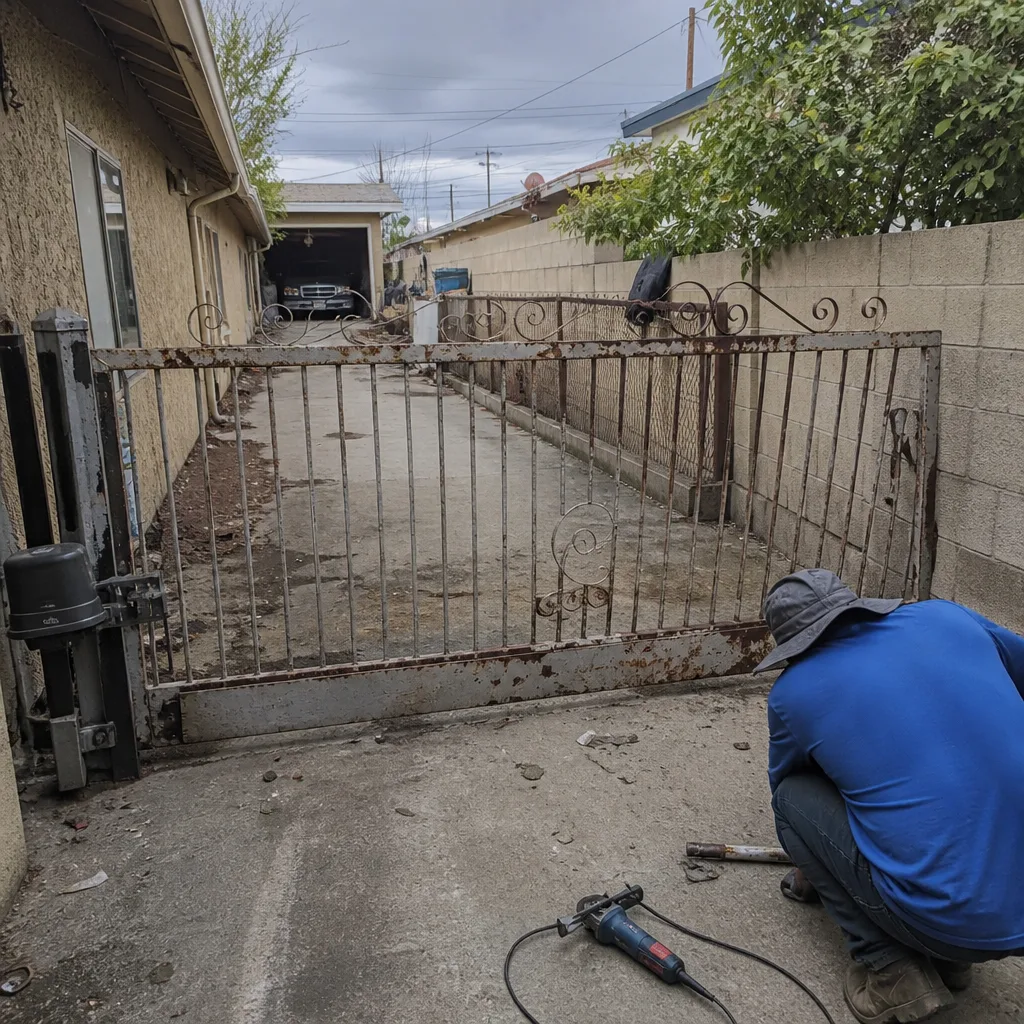 Before
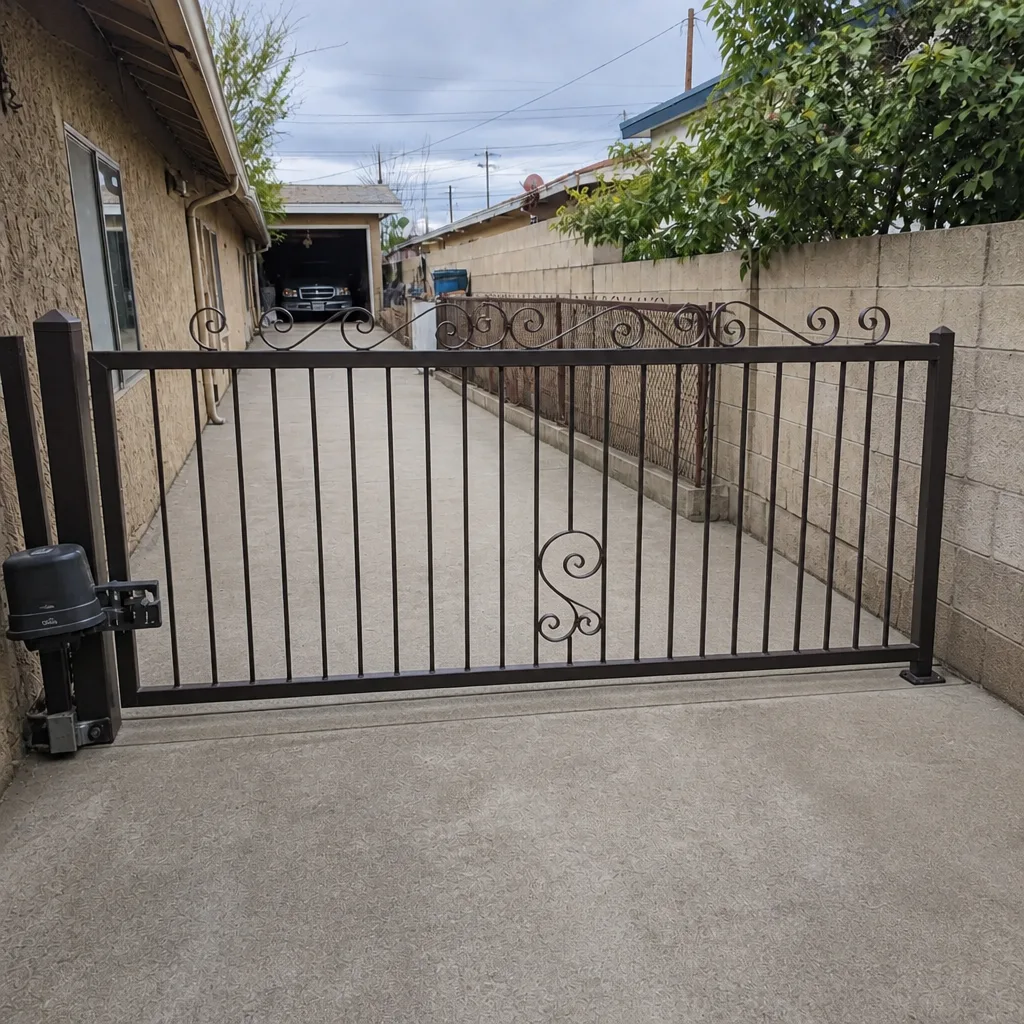 After
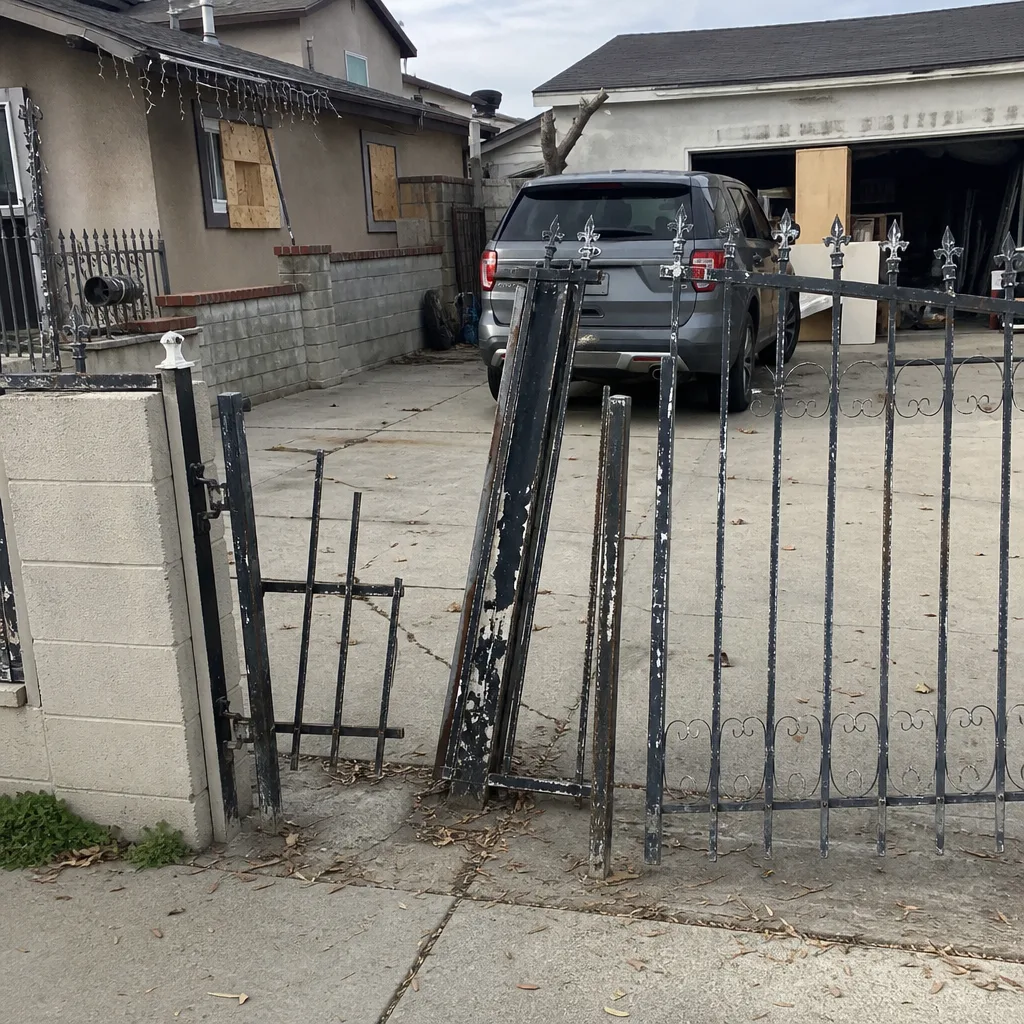 Before
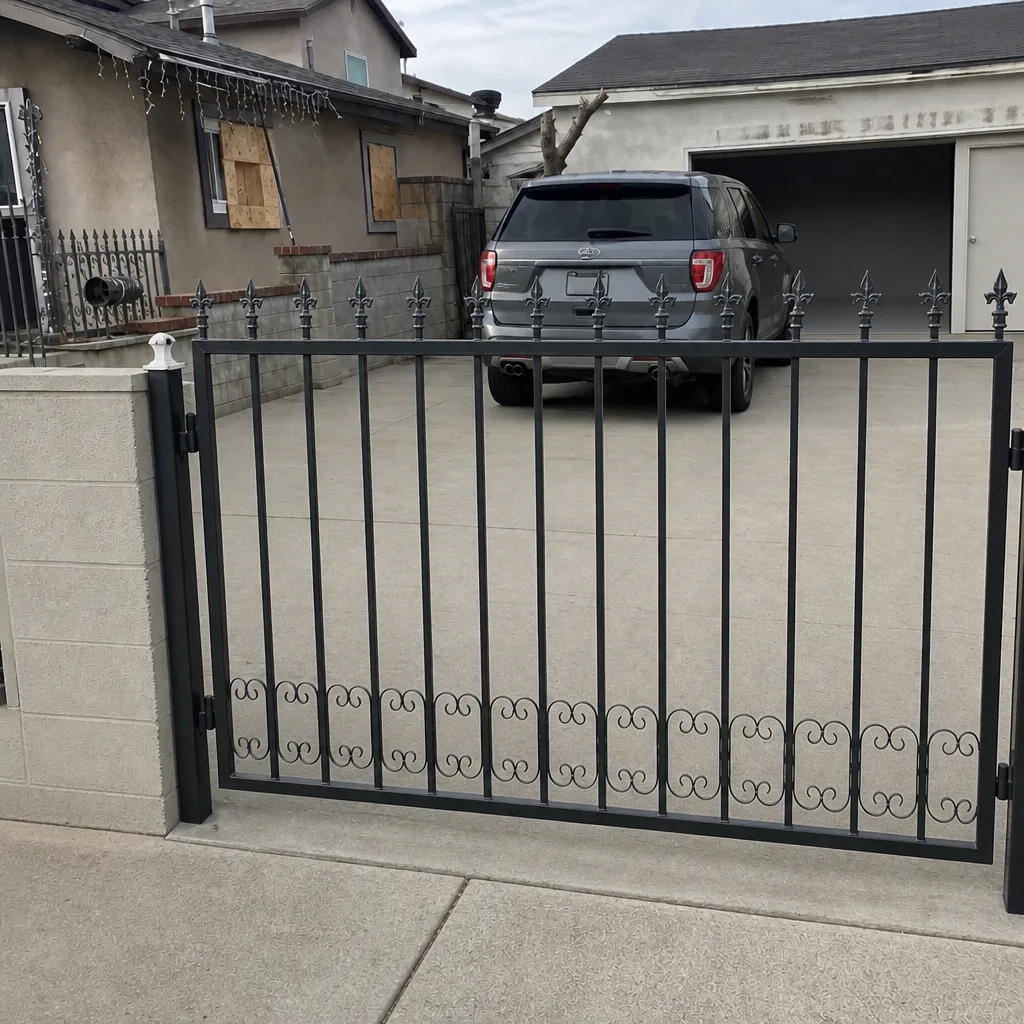 After
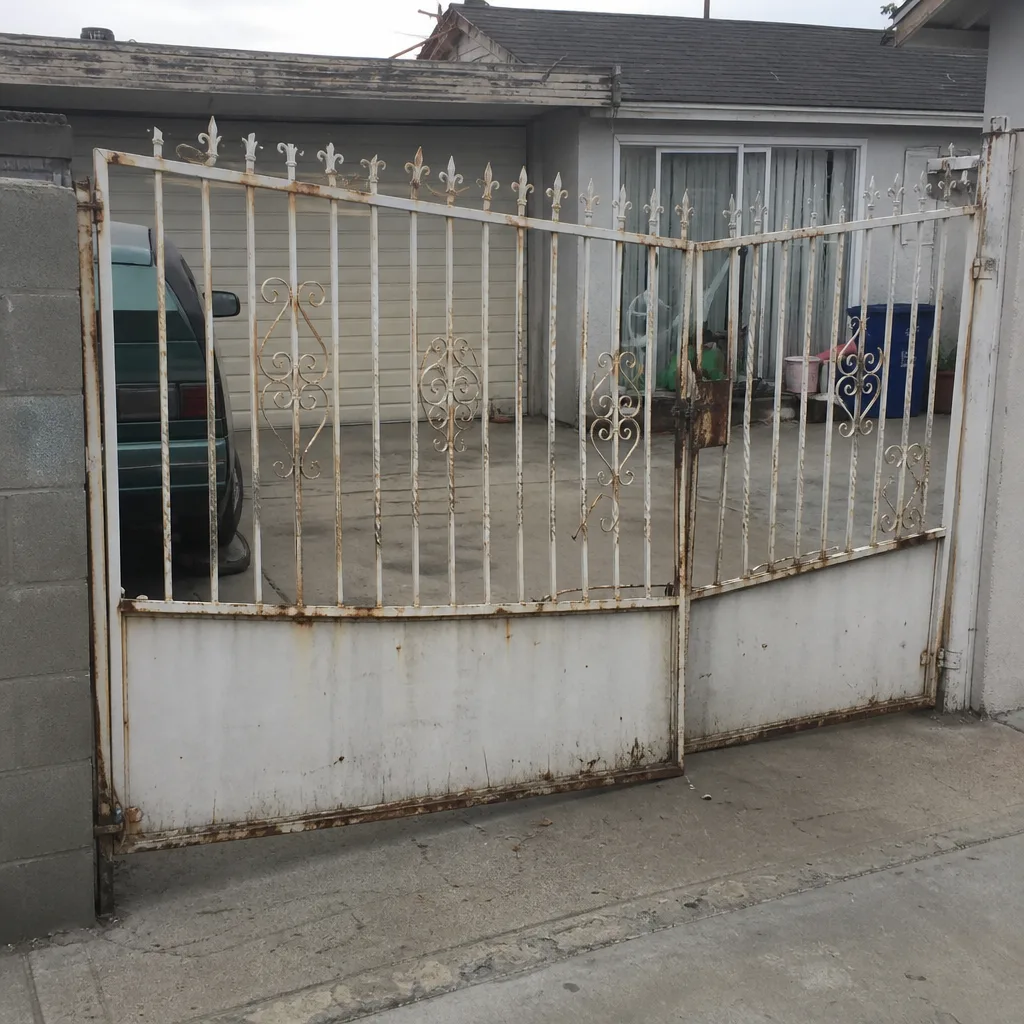 Before
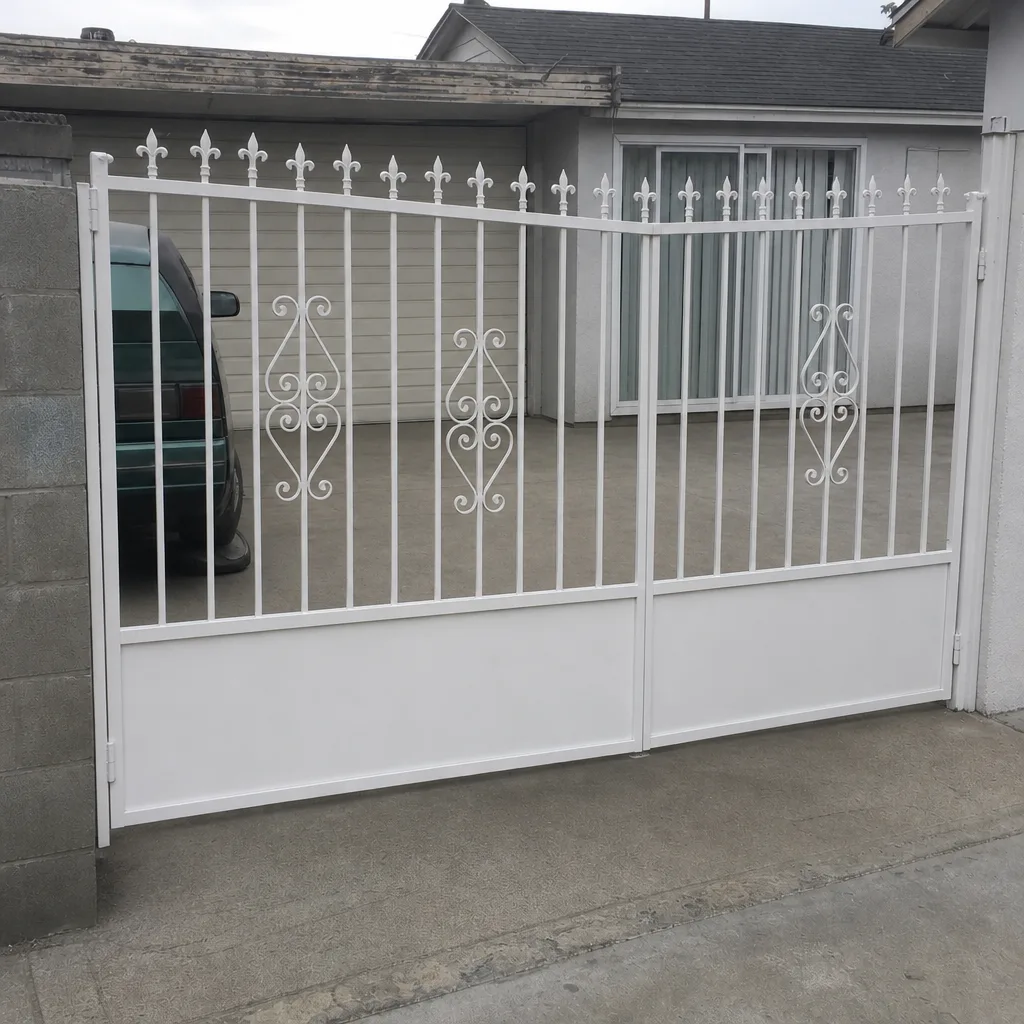 After